Showing posts with label Harvard. Show all posts

Thursday, September 26, 2013

Billionaire Philanthropist Bill Gates Tells the World Ctrl-Alt-Del was a Mistake


At a recent fundraiser at Harvard, Microsoft co-founder Bill Gates, admits that the keyboard shortcut Ctrl-Alt-Del was "a mistake." One button would have done the trick.

Thanks Bill. We appreciate the update.

But, wait. He pasted the blame on to the guy from IBM who designed the keyboard who has confessed to the thoughtlessness. Thanks IBM.

So to conclude, it was "a mistake" - not a bug or a feature.

Friday, May 17, 2013

Harvard drop-out, Bill Gates, wins World's Richest Man Contest this year


Congratulations, Bill Gates! And welcome back to being the World's Richest Top Dog!


article

Thursday, May 24, 2012

Mrs. Facebook, a simple creature, a simple billionaire

Who is Priscilla Chan?


Well, according to Priscilla herself, she is but a "simple creature."


Now, that simple creature instantly has a most complex life ahead of her.

The newlyweds, Mr. and Dr. Chan-Zuckerberg, both went to college at Harvard and have been together for nine years.

And they tied the knot in a very private and modest event in California this month with fewer than 100 in attendance.  Green Day lead singer Billie Joe Armstrong entertained the guests.

Of course Mark announced this event on his Facebook page when he changed his relationship status to "married."

Congratulations to Mr. and Dr. Chan-Zuckerberg! Think Billions wishes you both well!

Friday, January 13, 2012

Eddie Lampert of Sears is forced into his own share buy back program

Hey, stock investors! what happens to one of your positions when you fully realize that you are "long and wrong?" Well, there are multiple strategies, of course. Sell, admit a mistake, and exit your position. Hold and hope for price recovery. Enter into some sophisticated options positions.

Eddie Lampert, formerly known as The Next Warren Buffett, has experienced the "long and wrong" feeling with his beloved basket-case of a retail turnaround project better known as Sears (NASDAQ:SHLD). Currently selling for a cool $34 a share (52 week lo/hi 28.89 - 94.79) this dog of a stock has most certainly seen better days. Plus, from an operational standpoint, the news gets worse and worse month after month.

What is happening now to Eddie is that he is not just "long and wrong" with his personal holdings in Sears, but with his managed hedge fund as well. To placate his restless hedge fund investors, he has personally bought more Sears stock directly from the hedge fund to emphasize that he is "long and wrong" with conviction! Go, Eddie,go Eddie!

File this move under averaging down, doubling down or forced to eat his own shares under duress.

NY TIMES: Sears article


Eddie is receiving alot of quality strategic advice these days on this investment matter. Such as: dump Kmart, stop watching the movie Groundhog Day and take a part-time job at Walmart to learning retailing from the ground up. The Sears turnaround attempt will make for a great movie some day and/or a compelling Harvard Business School case study.

But, best of all, most think Eddie is still a high quality investor and that Sears is one of his few serious mistakes along the way.

So, we at Think Billions, wish Eddie Lampert well and hopes he enjoys a profitable 2012.


Saturday, October 8, 2011

George Kaiser: Oil Magnate and Crony Capitalist

The George Kaiser Family Foundation in Tulsa, OK was the largest shareholder in the now-bankrupt solar [waste project] company, Solyndra.

Kaiser, a Harvard MBA, is just another one of those rich oil guys you read about who's latest billionaire brainstorm idea was to put his guilty [oil]  conscience to rest by putting taxpayers on the hook for his pet solar cause. He is famous for saying things like:


"There's never before been more money shoved out the government's door in world history ... And our selfish parochial goal is to get as much for Tulsa and Oklahoma as we possibly can."

Only when George Kaiser speaks of "Tulsa and Oklahoma" - he really means The George Kaiser Family Foundation and crony capitalism.


Friday, September 30, 2011

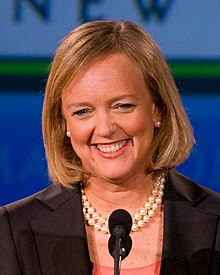
Meg Whitman is taking a $1 annual salary for her position as HP CEO


Meg Whitman, Harvard MBA and the fourth wealthiest woman in the state of California with a net worth of $1.3 billion in 2010, might be taking a $1 salary, but she is getting more than enough compensation with stock options.

As reported by the LA Times:

Whitman was also awarded the option to buy nearly 2 million shares of HP stock, which if vested today would be worth nearly $45 million. As with many executive-level options packages, however, the shares won't vest immediately: Whitman won't be able to cash in at least 900,000 of them in until a year from now.

Friday, August 21, 2009

Book review: The Accidental Billionaires

A book review excerpt:

Witness The Accidental Billionaires: The Founding Of Facebook—A Tale Of Sex, Money, Genius, And Betrayal, Ben Mezrich’s attempt to cash in on the Facebook phenomenon...........Mining his Harvard background once again, he weaves the story of Facebook’s origins as an idea for a hotornot.com-style dating website—but exclusive to the campus, like the university’s elite social clubs—into a hyperbolic techno-capitalist romance novel, complete with faithless lovers, spurned suitors, and jilted spouses.


article

Saturday, August 15, 2009

Harvard: #1 in billionaire alums

The Top Billionaire Universities

No. 1 Harvard University

Number of billionaire alumni: 54

Harvard has churned out more 10-figure titans than any other school on the planet (counting both undergraduate and graduate degrees). The school's roster of billionaire alumni includes Michael Bloomberg, Sumner Redstone, David Rockefeller, Sr. and William Randolph Hearst III.

No. 2 Stanford University

Number of billionaire alumni: 25
Stanford has the second-highest number of billionaire grads in the world, including Charles Schwab. Still, the Harvard of the West is probably better known for its billionaire dropouts. Google founders Sergey Brin and Larry Page earned master's degrees in computer science from Stanford before leaving Stanford doctorate programs to start the famously profitable search engine. Another (very rich) quitter: Microsoft Chief Exec Steve Ballmer.

No. 3 University of Pennsylvania

Number of billionaire alumni: 18
Early last year, U. Penn had 27 billionaire graduates, thanks to its famous business school, Wharton. But the financial meltdown last year shaved off almost a third of that list, including hedge fund tycoon Peter Briger Jr. and money maven Marc Rowan. Amongst the school's remaining billionaire grads: Ronald and Leonard Lauder, and Michael Milken.

No. 4 Columbia University (tie)

Number of billionaire alumni: 16
Amongst Columbia's grads is affable billionaire Warren Buffett, the world's second-richest man. While studying in New York (class of 1951), the Berkshire Hathaway chief learned from value-investing legend Benjamin Graham. Other rich alum: Wal-Mart Chairman S. Robson Walton and Henry Kravis.

No. 4 Yale University (tie)

Number of billionaire alumni: 16
Yale is alma mater to a slew of billionaire clans, including the Mars chocolate fortune (Forrest Mars Jr. and John Mars) and Cargill agricultural fortune (Cargill MacMillan Jr. and Whitney MacMillan). Investor Eddie Lampert and Blackstone Group co-founder Stephen Schwarzman also graduated from Yale; both were members of the infamous secret society Skull & Bones.


Forbes article

Copyrighted, Forbes.com. All rights reserved.

Friday, June 8, 2007

Bill Gates's commencement address to the Harvard University class of 2007

Below is the prepared text for Microsoft Chairman Bill Gates's commencement address to the Harvard University class of 2007 on June 7, 2007.

President Bok, former President Rudenstine, incoming President Faust, members of the Harvard Corporation and the Board of Overseers, members of the faculty, parents, and especially, the graduates:

I've been waiting more than 30 years to say this: "Dad, I always told you I'd come back and get my degree."

I want to thank Harvard for this timely honor. I'll be changing my job next year and it will be nice to finally have a college degree on my resume.

I applaud the graduates today for taking a much more direct route to your degrees. For my part, I'm just happy that the Crimson has called me "Harvard's most successful dropout." I guess that makes me valedictorian of my own special class� I did the best of everyone who failed.

But I also want to be recognized as the guy who got Steve Ballmer to drop out of business school. I'm a bad influence. That's why I was invited to speak at your graduation. If I had spoken at your orientation, fewer of you might be here today.

Harvard was just a phenomenal experience for me. Academic life was fascinating. I used to sit in on lots of classes I hadn't even signed up for. And dorm life was terrific. I lived up at Radcliffe, in Currier House. There were always lots of people in my dorm room late at night discussing things, because everyone knew I didn't worry about getting up in the morning. That's how I came to be the leader of the anti-social group. We clung to each other as a way of validating our rejection of all those social people.

Radcliffe was a great place to live. There were more women up there, and most of the guys were science-math types. That combination offered me the best odds, if you know what I mean. This is where I learned the sad lesson that improving your odds doesn't guarantee success.

One of my biggest memories of Harvard came in January 1975, when I made a call from Currier House to a company in Albuquerque that had begun making the world's first personal computers. I offered to sell them software.

I worried that they would realize I was just a student in a dorm and hang up on me. Instead they said: "We're not quite ready, come see us in a month," which was a good thing, because we hadn't written the software yet. From that moment, I worked day and night on this little extra credit project that marked the end of my college education and the beginning of a remarkable journey with Microsoft.

What I remember above all about Harvard was being in the midst of so much energy and intelligence. It could be exhilarating, intimidating, sometimes even discouraging, but always challenging. It was an amazing privilege � and though I left early, I was transformed by my years at Harvard, the friendships I made, and the ideas I worked on.

But taking a serious look back I do have one big regret.

I left Harvard with no real awareness of the awful inequities in the world -- the appalling disparities of health, and wealth, and opportunity that condemn millions of people to lives of despair.

I learned a lot here at Harvard about new ideas in economics and politics. I got great exposure to the advances being made in the sciences.

But humanity's greatest advances are not in its discoveries � but in how those discoveries are applied to reduce inequity. Whether through democracy, strong public education, quality health care, or broad economic opportunity reducing inequity is the highest human achievement.

I left campus knowing little about the millions of young people cheated out of educational opportunities here in this country. And I knew nothing about the millions of people living in unspeakable poverty and disease in developing countries.

It took me decades to find out.

You graduates came to Harvard at a different time. You know more about the world's inequities than the classes that came before. In your years here, I hope you've had a chance to think about how in this age of accelerating technology we can finally take on these inequities, and we can solve them.

Imagine, just for the sake of discussion, that you had a few hours a week and a few dollars a month to donate to a cause and you wanted to spend that time and money where it would have the greatest impact in saving and improving lives. Where would you spend it?

For Melinda and for me, the challenge is the same: how can we do the most good for the greatest number with the resources we have.

During our discussions on this question, Melinda and I read an article about the millions of children who were dying every year in poor countries from diseases that we had long ago made harmless in this country. Measles, malaria, pneumonia, hepatitis B, yellow fever. One disease I had never even heard of, rotavirus, was killing half a million kids each year none of them in the United States.

We were shocked. We had just assumed that if millions of children were dying and they could be saved, the world would make it a priority to discover and deliver the medicines to save them. But it did not. For under a dollar, there were interventions that could save lives that just weren't being delivered.

If you believe that every life has equal value, it's revolting to learn that some lives are seen as worth saving and others are not. We said to ourselves: "This can't be true. But if it is true, it deserves to be the priority of our giving."

So we began our work in the same way anyone here would begin it. We asked: "How could the world let these children die?"

The answer is simple, and harsh. The market did not reward saving the lives of these children, and governments did not subsidize it. So the children died because their mothers and their fathers had no power in the market and no voice in the system.

But you and I have both.

We can make market forces work better for the poor if we can develop a more creative capitalism � if we can stretch the reach of market forces so that more people can make a profit, or at least make a living, serving people who are suffering from the worst inequities. We also can press governments around the world to spend taxpayer money in ways that better reflect the values of the people who pay the taxes.

If we can find approaches that meet the needs of the poor in ways that generate profits for business and votes for politicians, we will have found a sustainable way to reduce inequity in the world.

This task is open-ended. It can never be finished. But a conscious effort to answer this challenge will change the world.

I am optimistic that we can do this, but I talk to skeptics who claim there is no hope. They say: "Inequity has been with us since the beginning, and will be with us till the end because people just don't care."

I completely disagree.

I believe we have more caring than we know what to do with.

All of us here in this Yard, at one time or another, have seen human tragedies that broke our hearts, and yet we did nothing -- not because we didn't care, but because we didn't know what to do. If we had known how to help, we would have acted.

The barrier to change is not too little caring; it is too much complexity.

To turn caring into action, we need to see a problem, see a solution, and see the impact. But complexity blocks all three steps.

Even with the advent of the Internet and 24-hour news, it is still a complex enterprise to get people to truly see the problems. When an airplane crashes, officials immediately call a press conference. They promise to investigate, determine the cause, and prevent similar crashes in the future.

But if the officials were brutally honest, they would say: "Of all the people in the world who died today from preventable causes, one half of one percent of them were on this plane. We're determined to do everything possible to solve the problem that took the lives of the one half of one percent."

The bigger problem is not the plane crash, but the millions of preventable deaths.

We don't read much about these deaths. The media covers what's new and millions of people dying is nothing new. So it stays in the background, where it's easier to ignore. But even when we do see it or read about it, it's difficult to keep our eyes on the problem. It's hard to look at suffering if the situation is so complex that we don't know how to help. And so we look away.

If we can really see a problem, which is the first step, we come to the second step: cutting through the complexity to find a solution.

Finding solutions is essential if we want to make the most of our caring. If we have clear and proven answers anytime an organization or individual asks "How can I help?," then we can get action and we can make sure that none of the caring in the world is wasted. But complexity makes it hard to mark a path of action for everyone who cares and that makes it hard for their caring to matter.

Cutting through complexity to find a solution runs through four predictable stages: determine a goal, find the highest-leverage approach, discover the ideal technology for that approach, and in the meantime, make the smartest application of the technology that you already have whether it's something sophisticated, like a drug, or something simpler, like a bednet.

The AIDS epidemic offers an example. The broad goal, of course, is to end the disease. The highest-leverage approach is prevention. The ideal technology would be a vaccine that gives lifetime immunity with a single dose. So governments, drug companies, and foundations fund vaccine research. But their work is likely to take more than a decade, so in the meantime, we have to work with what we have in hand and the best prevention approach we have now is getting people to avoid risky behavior.

Pursuing that goal starts the four-step cycle again. This is the pattern. The crucial thing is to never stop thinking and working and never do what we did with malaria and tuberculosis in the 20th century which is to surrender to complexity and quit.

The final step after seeing the problem and finding an approach is to measure the impact of your work and share your successes and failures so that others learn from your efforts.

You have to have the statistics, of course. You have to be able to show that a program is vaccinating millions more children. You have to be able to show a decline in the number of children dying from these diseases. This is essential not just to improve the program, but also to help draw more investment from business and government.

But if you want to inspire people to participate, you have to show more than numbers; you have to convey the human impact of the work so people can feel what saving a life means to the families affected.

I remember going to Davos some years back and sitting on a global health panel that was discussing ways to save millions of lives. Millions! Think of the thrill of saving just one person's life then multiply that by millions. Yet this was the most boring panel I've ever been on ever. So boring even I couldn't bear it.

What made that experience especially striking was that I had just come from an event where we were introducing version 13 of some piece of software, and we had people jumping and shouting with excitement. I love getting people excited about software but why can't we generate even more excitement for saving lives?

You can't get people excited unless you can help them see and feel the impact. And how you do that is a complex question.

Still, I'm optimistic. Yes, inequity has been with us forever, but the new tools we have to cut through complexity have not been with us forever. They are new they can help us make the most of our caring and that's why the future can be different from the past.

The defining and ongoing innovations of this age biotechnology, the computer, the Internet give us a chance we've never had before to end extreme poverty and end death from preventable disease.

Sixty years ago, George Marshall came to this commencement and announced a plan to assist the nations of post-war Europe. He said: "I think one difficulty is that the problem is one of such enormous complexity that the very mass of facts presented to the public by press and radio make it exceedingly difficult for the man in the street to reach a clear appraisement of the situation. It is virtually impossible at this distance to grasp at all the real significance of the situation."

Thirty years after Marshall made his address, as my class graduated without me, technology was emerging that would make the world smaller, more open, more visible, less distant.

The emergence of low-cost personal computers gave rise to a powerful network that has transformed opportunities for learning and communicating.

The magical thing about this network is not just that it collapses distance and makes everyone your neighbor. It also dramatically increases the number of brilliant minds we can have working together on the same problem and that scales up the rate of innovation to a staggering degree.

At the same time, for every person in the world who has access to this technology, five people don't. That means many creative minds are left out of this discussion -- smart people with practical intelligence and relevant experience who don't have the technology to hone their talents or contribute their ideas to the world.

We need as many people as possible to have access to this technology, because these advances are triggering a revolution in what human beings can do for one another. They are making it possible not just for national governments, but for universities, corporations, smaller organizations, and even individuals to see problems, see approaches, and measure the impact of their efforts to address the hunger, poverty, and desperation George Marshall spoke of 60 years ago.

Members of the Harvard Family: Here in the Yard is one of the great collections of intellectual talent in the world.

What for?

There is no question that the faculty, the alumni, the students, and the benefactors of Harvard have used their power to improve the lives of people here and around the world. But can we do more. Can Harvard dedicate its intellect to improving the lives of people who will never even hear its name?

Let me make a request of the deans and the professors the intellectual leaders here at Harvard: As you hire new faculty, award tenure, review curriculum, and determine degree requirements, please ask yourselves:

Should our best minds be dedicated to solving our biggest problems?

Should Harvard encourage its faculty to take on the world's worst inequities? Should Harvard students learn about the depth of global poverty � the prevalence of world hunger � the scarcity of clean water� the girls kept out of school� the children who die from diseases we can cure?

Should the world's most privileged people learn about the lives of the world's least privileged?

These are not rhetorical questions, you will answer with your policies.

My mother, who was filled with pride the day I was admitted here never stopped pressing me to do more for others. A few days before my wedding, she hosted a bridal event, at which she read aloud a letter about marriage that she had written to Melinda. My mother was very ill with cancer at the time, but she saw one more opportunity to deliver her message, and at the close of the letter she said: "From those to whom much is given, much is expected."

When you consider what those of us here in this Yard have been given in talent, privilege, and opportunity there is almost no limit to what the world has a right to expect from us.

In line with the promise of this age, I want to exhort each of the graduates here to take on an issue a complex problem, a deep inequity, and become a specialist on it. If you make it the focus of your career, that would be phenomenal. But you don't have to do that to make an impact. For a few hours every week, you can use the growing power of the Internet to get informed, find others with the same interests, see the barriers, and find ways to cut through them.

Don't let complexity stop you. Be activists. Take on the big inequities. It will be one of the great experiences of your lives.

You graduates are coming of age in an amazing time. As you leave Harvard, you have technology that members of my class never had. You have awareness of global inequity, which we did not have. And with that awareness, you likely also have an informed conscience that will torment you if you abandon these people whose lives you could change with very little effort.

You have more than we had; you must start sooner, and carry on longer.

Knowing what you know, how could you not?

And I hope you will come back here to Harvard 30 years from now and reflect on what you have done with your talent and your energy. I hope you will judge yourselves not on your professional accomplishments alone, but also on how well you have addressed the world's deepest inequities � on how well you treated people a world away who have nothing in common with you but their humanity.

Good luck.